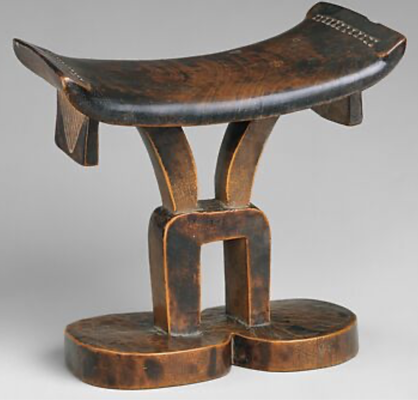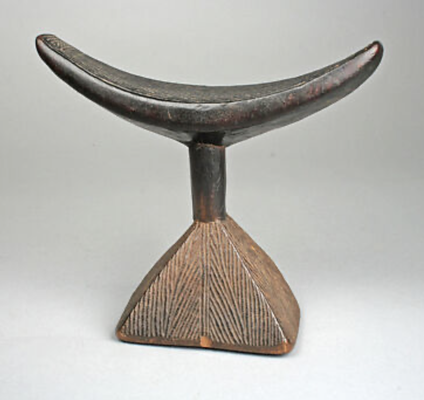


Headrest... Ear to Shoulder... Chin to Ear
Institution: The City of Muncie, IN
Site: Whitely: Shaffer Chapel, MLK Ave & Muncie Library CC
Award: Commission
Date Proposed: November 6th, 2024
Status: Finalist (Unrealized)
Installation: N/A
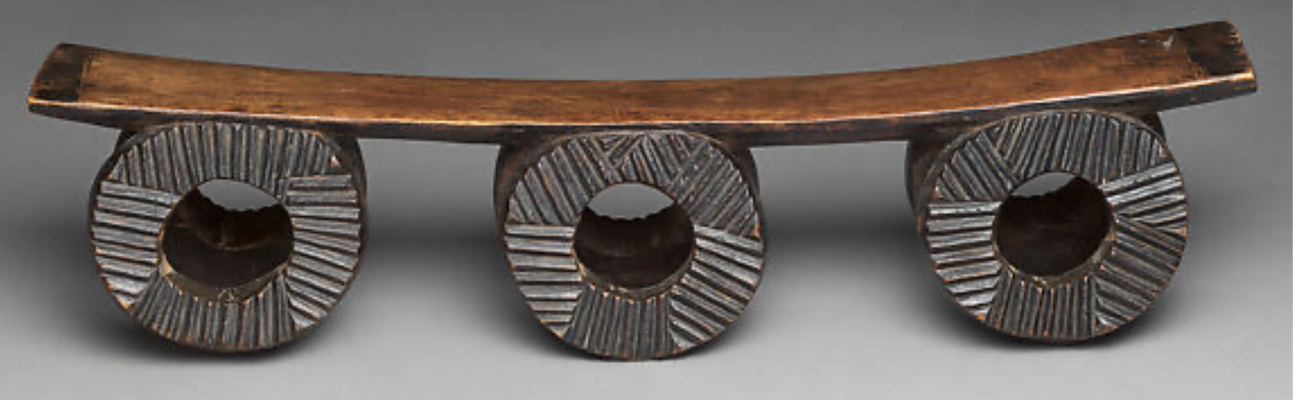
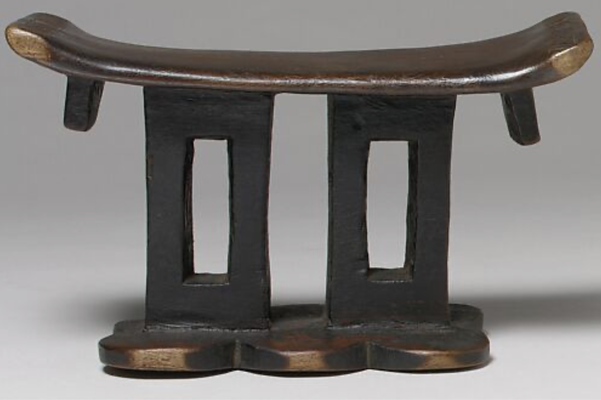
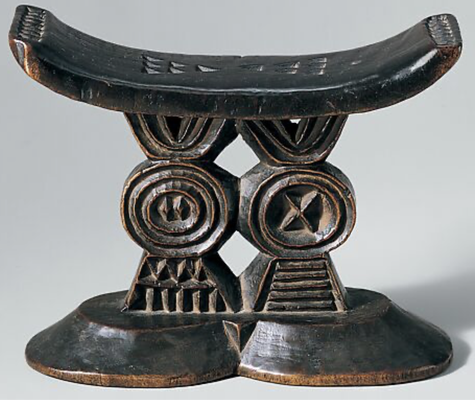
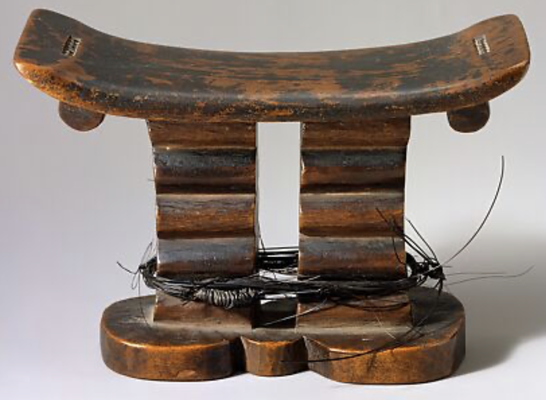
Carved wooden headrests have a long history in Africa. Headrests were made to sleep on while at the same time protecting the elaborate coiffure of the sleeper. Headrests are small, their height being the average distance from ear to shoulder. The user could sleep either on their back with the headrest under the base of the neck, or on their side with the headrest under their chin and one ear. The origins of this tradition are unknown, but the oldest surviving examples date back to ancient Egypt (Middle Kingdom, ca 2030 B.C). A remarkable diversity of styles of related forms were developed by different cultural groups across Africa.
The use of headrests in southern Africa has been traced back to the twelfth-century archaeological site of Mapungubwe, an urban center along the Limpopo River. There, evidence of gold sheeting believed to have adorned a long-disintegrated wood headrest has been recovered. Elsewhere, In Gabon, Tsonga sculptors have been credited with the most varied formal solutions to the support element.
In Zulu society, women commissioned male carvers to produce a headrest for the bride and groom as part of the dowry. Among the Shona, headrests were exclusively carved and used by men. Since they also functioned as vehicles of communication with the ancestral realm, headrests and other personal articles were frequently buried with their owners, evidencing the intimate connection between the object and its owner. In other cases, they were passed to descendants.
Summarized and condensed by the artist from the MetMuseum.org